
You’ll wander Andalusia’s cultural crossroads, where Moorish artistry meets Gothic grace and Renaissance balance. Start in Granada’s Alhambra gardens, feel the cool palm shade and tiled shadows, then drift through Albaicín’s white lanes toward Mirador de San Nicolás. In Seville, stand before the Alcázar and Cathedral, hear flamenco’s heartbeat in tavernas, and lose yourself in Barrio Santa Cruz’s secret alleys. Expect pottery, brass bands, and vibrant markets that tell a living, sunlit story you won’t forget. There’s more to discover beyond.
Key Takeaways
- Visit the Albaicín and Sacromonte to experience historic streets, whitewashed lanes, Gypsy traditions, and intimate cave performances.
- Explore Andalusian architecture, from Mudéjar decoration to Gothic cathedrals and Renaissance façades, illuminated by distinctive regional light.
- Attend Holy Week processions and vibrant flamenco tavernas to feel the region’s faith, music, and dance in daily life.
- Savor tapas, markets, and olive oil—taste regional flavors while watching artisans craft ceramics, leatherwork, and pottery.
- Tour museums and archives that preserve Roman foundations, Moorish heritage, and contemporary art shaping Andalusian cultural memory.
Why Andalusia Is a Cultural Crossroads
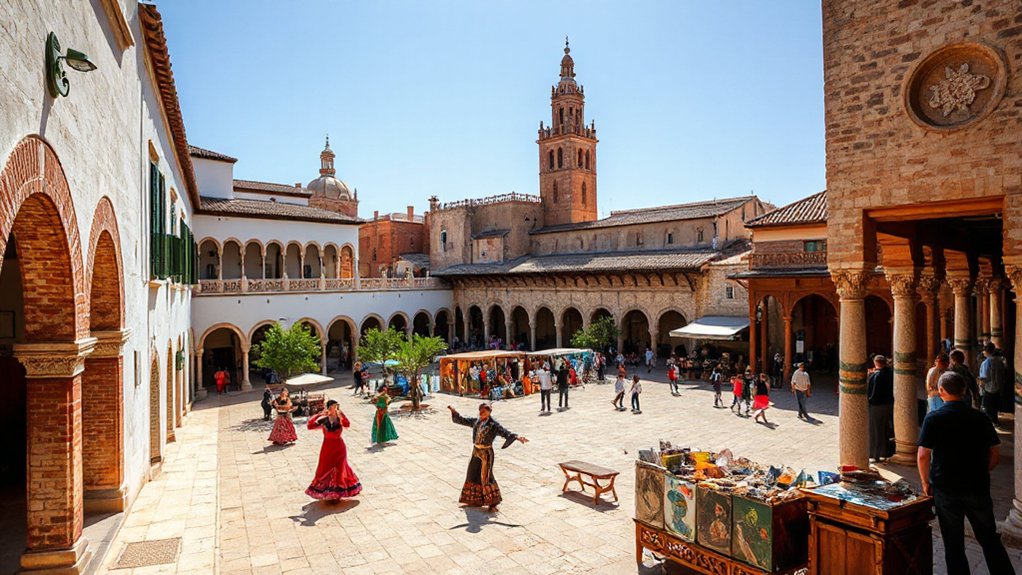
Andalusía sits at the crossroads of histories, where Moorish arches, Gothic spires, and Roman roads braid into a single, living portrait. You sense it in every street, every plaza, where voices braid languages and rhythms.
You walk through markets buzzing with sound, catching the scent of citrus and spice, noticing how Modern festivals pulse through the year, turning neighborhoods into stages.
You feel time colliding with today, a continuum rather than a line, as craftsmen keep traditional crafts alive with patient hands and stubborn pride.
You listen to conversations that link past and present, a shared archive of taste, sound, and craft.
You learn that being Andalusía means belonging to a living patchwork, always stitching, always evolving.
Granada’s Alhambra: Moorish Art and Royal Gardens
You wander Granada’s gates and feel Moorish Architecture Mastery breathe through the stone, precise arches guiding your gaze.
The Royal Garden Aesthetics unfold in quiet symmetry, where water and flora choreograph a timeless dialogue.
In every courtyard’s glow, you sense the Timeless Courtyard Atmosphere shaping memory as you move.
Moorish Architecture Mastery
From the moment you step into Granada’s Alhambra, Moorish architecture reveals itself as a dialogue between light, water, and stone. You move through carved stucco and honeyed plaster, catching arabesque motifs that repeat like whispered promises.
Every corridor folds space, guiding your gaze toward delicate muqarnas that seem to suspend time. You feel the tactile weight of limestone, cool and precise, tempered by fountains that choreograph a rhythm of sound and reflection.
The Moorish influence lives in the way doors frame vistas, inviting you to a deeper listen rather than a single glance. Architectural grandeur emerges not from excess, but from balance—where geometric order meets nature’s grace, and the structure speaks in quiet, enduring eloquence.
Royal Garden Aesthetics
In Granada’s Alhambra, the royal gardens unfold as living poetry: water lattices the air, citrus sweetness mingles with the scent of earth, and carefully placed trees frame scenes that feel both intimate and monumental.
You move through clipped hedges and reflective pools, noticing how garden aesthetics steer attention from marble to moss, from fretwork shadows to sunlit openings.
Paths arc softly, guiding your gaze toward fountains where spray forms delicate halos.
The ensemble blends geometry with organic flourish, creating a rhythm of quiet drama that invites pause.
You sense governance in every plant choice, from evergreen resilience to seasonal color—a deliberate dialogue between royal needs and natural beauty—an enduring testament to courtyard artistry.
Royal gardens reveal intention, restraint, and grace.
Timeless Courtyard Atmosphere
The courtyard around Granada’s Alhambra breathes with a timeless stillness, where shade and light bend into a single quiet moment. You move along cool stones, tracing the delicate geometry of arcs, fountains, and slender archways. Water murmurs from hidden channels, delivering a soft rhythm that steadies your breath.
Every planter, tile, and railing seems placed to heighten a sense of restrained grandeur, a pocket of history you can almost step into. Courtyard serenity lingers as the day unfolds, inviting you to pause, listen, observe.
The air glows with a Timeless ambiance, unhurried yet alive, as if the Moorish artistry purposely slowed time. You leave with an impression of stillness carried forward, a memory etched in light and shade.
Albaicín and Sacromonte: Neighbourhoods With Soul
You wander the Albaicín’s steep lanes, where history feels like stone under your feet and each overlook hints at a Moorish past.
In Sacromonte, the Gypsy caves pulse with music and memory, crunching softly under your steps as flames of sunset glow through narrow doors.
You sense a living dialogue between historic heart and soulful echoes, inviting you to listen, reflect, and stay a little longer.
Albaicín: Historic Heart
What makes Albaicín feel like a living postcard is how its whitewashed alleys climb the hill, twisting toward the horizon where the Alhambra laces the sky. You walk slowly, listening to footsteps that echo centuries, smelling citrus and smoke from distant kitchens, feeling history breathe through stone and light.
This is the Historic Heart, where balconies spill flowers and stories into the breeze. You notice Traditional crafts in tiny workshops, and Local festivals that pulse through narrow lanes with music and laughter.
- Whitewashed walls glint under sunlit azoteas
- Narrow stairs winding toward Mirador de San Nicolás
- Crafters weaving, painting, and selling at corners
You absorb, you compare, you remember. Albaicín endures.
Sacromonte Gipsy Caves
Nestled between Albaicín’s white lanes and the hillside, Sacromonte unfolds in a tangle of cave houses and hillside terraces where music slips from every doorway. You walk among chalky shelves carved into rock, and the air tastes of drums and distant voices, a living theater carved into the hillside.
Gypsy traditions echo through narrow corridors, where fires glow and stories hum at twilight. Cave architecture shapes daily life, with rooms opening onto uneven patios and terraces that tumble toward the valley.
You notice how light spills differently here, unsettling the ordinary and inviting curiosity. The landscape feels intimate and ancient, a pulse you can trace with your footsteps, listening for footsteps of generations.
Soulful Moorish Echoes
From the echo of drumbeats and whispers of old walls, Albaicín and Sacromonte breathe a Moorish resonance that lingers in stone and street. You wander narrow lanes where light pools on whitewashed courtyards, and every corner hums with memory.
The air tastes of Mediterranean cuisine, saffron and citrus, as voices drift from courtyards and tiny tavernas. You trace Moorish textiles in tiled facades, in embroidered shawls, in the rhythm of life that refuses to rush.
You sense a soulful pulse in music, cave echoes softened by evening breeze, and the scent of tea.
- Drumming nights and lantern-lit plazas
- Textiles, tiles, and timeless patterns
- Shared meals weaving history into memory
Córdoba’s Mezquita: Where Cultures Meet in Stone
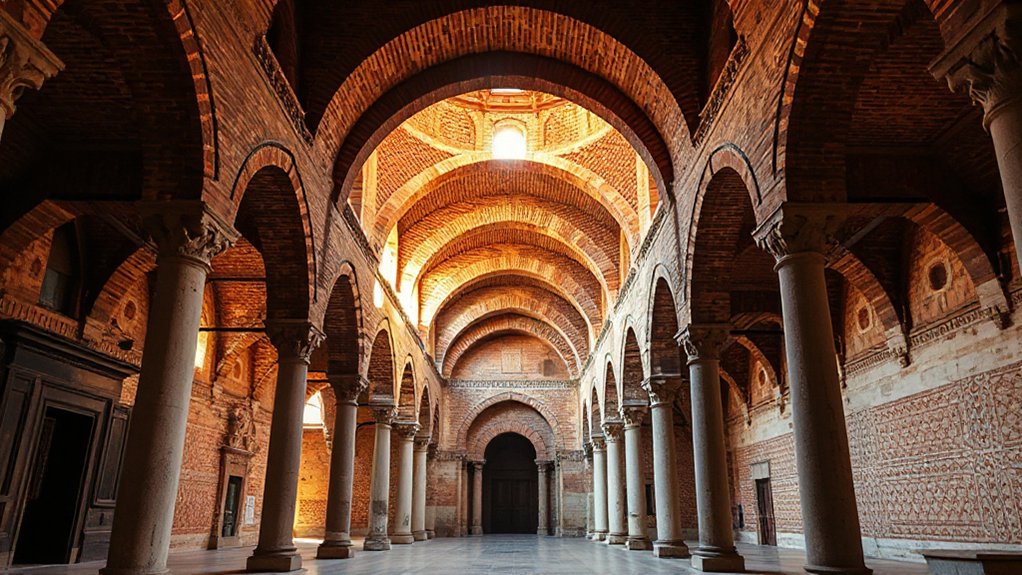
Córdoba’s Mezquita rises from the quiet air of the old city as a living record of exchange, where slender arches and honeyed stone tell a history of confluence. You walk its threshold and feel variables collide: Christian, Muslim, Jewish threads, all pressed into a single skin.
The nave stretches like a quiet sea, yet the horseshoe curves whisper Moorish Influence with stubborn clarity, then yield to a cathedral’s sober altarpiece. Light slides along columns, casting pale trains across carpeted floors, inviting you to trace how faiths negotiated space.
In every arch, you sense negotiation, not conquest—stones listening as much as they bear. Córdoba’s Mezquita embodies a shared memory, a durable testament to cross-cultural dialogue in stone.
Seville’s Golden Age Landmarks: Alcázar, Cathedral, Barrio Santa Cruz
Seville’s Golden Age unfurls in three enduring signatures: the Alcázar’s sunlit courtyards, the Cathedral’s immense stone, and Barrio Santa Cruz’s intimate maze. You step into history, sensing Moorish whispers in tiled water, Gothic arcs, and Baroque flourishes that stack memory like bricks.
Each site chants a different tempo of Andalusian life, where Andalusian cuisine drifts from courtyard to tavern and traditional festivals color the air with scent and song. You navigate as a reader of light, feeling stone breathe under your fingertips.
- Alcázar gardens glimmer with palm shade and tiled shadows
- Cathedral towers crown a city’s heartbeat of faith and power
- Barrio Santa Cruz alleys hold secrets of days gone by
Flamenco Flame: Rhythms in Andalusian Tavernas
In Andalusian tavernas, flamenco isn’t merely performance—it’s a living pulse you can feel in the floorboards and the air. You catch each heartbeat in the clack of heels, the sly scrape of a heel on wood, the breathy sigh between guitar notes.
The guitarist narrates with strings, shaping weather into sound, the guitar craftsmanship evident as wood sings under skilled hands. Singers puncture the hush with embered shouts, while dancers pin down the rhythm, shawls and scarves spiraling in time.
You notice the traditional dress catching light, the frills and embroiders turning movement into color. The room tightens, loosens, then releases, a shared breath of passion that keeps the flame alive, intimate, undeniable.
The tavern becomes a waiting, beating heart.
Mudéjar, Gothic, and Renaissance: Architectural Contrasts
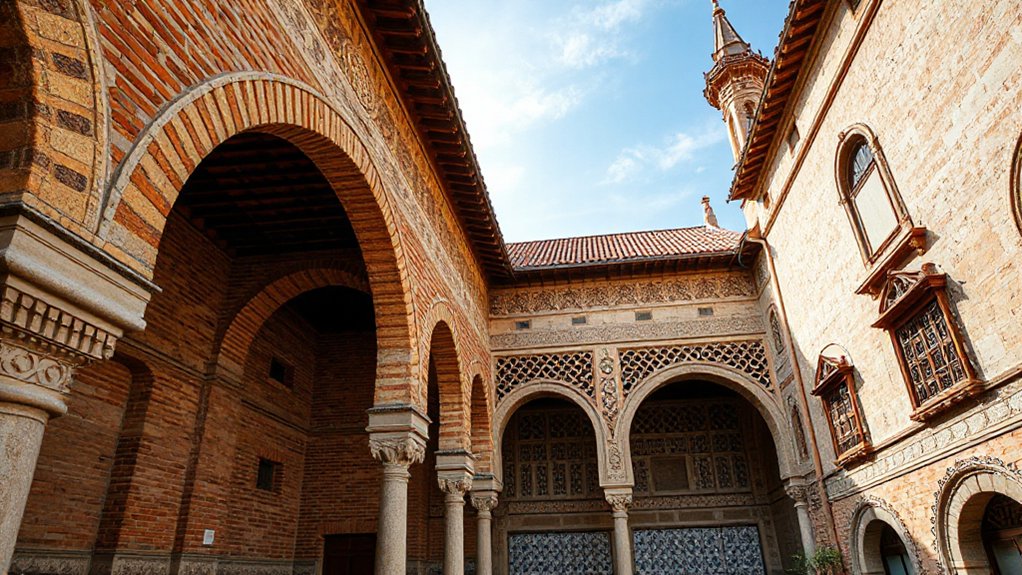
Mudéjar ornamentation glints with tucked-away patterns, inviting you to notice how color and latticework soften stone.
As you move through Gothic verticality, you feel the space press upward, a language of arches and light that sharpens perception.
In Renaissance proportions, balance settles the eye, revealing how harmony ties these eras into one steady conversation.
Mudéjar Ornamentation Echoes
The intricate Mudéjar ornamentation threads through Andalusia’s Gothic and Renaissance facades, revealing a dialogue between cultures stamped in stone and stucco. You trace delicate arches, interlaced with star patterns, feeling echoes of Moorish design resonate beneath plaster and timber.
The texture shifts as you move: from exuberant ceramic tile to restrained stone carving, a fluid conversation across centuries. You recognize how Mudejar ornamentation bridges ceilings, walls, and facades, turning surfaces into storytelling.
- Interlaced arches and ceramic tiles shaping quiet conversations
- Star motifs meeting Gothic verticality in folded plaster
- Subtle geometry linking Moorish roots with Renaissance symmetry
Gothic Structural Verticality
Gothic verticality slices the skyline with pointed arches and ribbed vaults that seem to suspend time, even as Mudéjar and Renaissance accents lean into the edges of the frame. You walk beneath slender milestones of stone, feeling lightness resist gravity, and you notice how weight becomes whisper.
The rhythm of flying buttresses supports long aisles that guide your gaze upward, toward tracery that braids the heavens. In medieval cathedrals, the craft speaks in stone and glass, a dialogue between earth and echo.
Stained glass catches sunbeams and fractures them into colors you can almost taste, a memory of process and faith. You sense contrast, tension, and harmony all at once, a landscape where history leans into the present.
Renaissance Proportions Harmony
Renaissance proportions arrive as a measured counterpoint to Mudéjar and Gothic, stitching balance into Andalusian light and stone. You feel how arches soften into halls, and proportions harmonize with courtyards where olive groves murmur beyond the windows. Medieval artistry meets new symmetry, yet never abandons craft’s tactile memory.
- You trace rhythm in decorative cornices that align with sunlit plazas
- You sense the quiet drama of columns framing gardens, a dialogue of light
- You hear distant bells echoing through olive groves and whitewashed walls
This harmony doesn’t erase contrast; it reframes it, letting Renaissance restraint illuminate Mudéjar warmth and Gothic verticality. You walk the seam where history breathes, noting textures, shadows, and the careful balance that defines Andalusian ensembles.
Whitewashed Towns: The Color Language of Andalusia
From the moment you glimpse a hillside village, you’re drawn by the gleam of whitewashed walls that seem to pulse with heat and heartbeat alike, a color language that speaks of sun, wind, and centuries of daily life. You notice how the walls reflect light in shimmering swirls, cooling courtyards tucked behind doors of blue and green.
The sheer brightness reduces noise to color, sharpening silhouettes and framing narrow lanes like living paintings. Color symbolism threads through every corner—purity, refuge, resilience—while faces and textiles bear subtler hues that animate the scene.
In these towns, artistic expressions spill from plaster to tile, turning simple façades into quiet monuments of memory, hope, and shared heritage that stay with you long after you leave.
Roman and Carthaginian Echoes in Andalusia
You’ll trace how Roman roads stitched landscapes and towns into a durable map of memory, hinting at empire-stitched rhythms beneath today’s streets.
Carthaginian traces whisper across the region—ancient ports, fortifications, and artifacts that still challenge your sense of origin.
As you move from ruin to ruin, you’ll sense a layered dialogue between conquerors and communities that reshaped Andalusia.
Roman Echoes In Andalusia
Two millennia of memory linger along Andalusia’s roads: Roman aqueducts slice the countryside, and Carthaginian stones murmur of an empire’s reach. You walk where mosaics ground the soil, where legions carved roads that still guide your steps. The echoes you notice aren’t just ruins; they’re a living cadence, a heartbeat in stone and shard.
You sense ancient ruins beneath your feet, and pottery traditions whisper from shards you glimpse in market stalls, telling stories of daily life and craft.
- Roman milestones marking routes through sunlit valleys
- Mosaics catching rain like stained glass over ordinary streets
- Pottery shards revealing workshops, tastes, and trades
You listen, observe, and feel how endurance wires history to the present.
Carthaginian Traces Across Region
Across the landscape, Carthaginian traces whisper alongside Roman echoes, as if the ancient powers traded routes and ideas in the same breath. You stroll through coastal towns where ruins hint at Ancient Carthage and Phoenician Influence, and you feel the sea’s mediation between cultures.
In trading harbors and inland sanctuaries, carvings mingle glyphs with Iberian symbols, suggesting networks that transcended empires. You notice harbor walls fortified with Punic design, and you hear stories of sailors who mapped routes between Cádiz and Carthage, carrying olives, tin, and wine.
Markets once buzzed with multilingual chatter, a testimony to shared commerce. The landscape remains a palimpsest, where Carthaginian footprints rest beside Roman stones, inviting you to trace the dialogue of resilience and exchange.
Andalusian Patios: Scent and Design at Home
In Andalusia, patios are intimate stages where scent and shape meet, drawing you in with the quiet drama of blooming bougainvillea, citrus, and jasmine. You notice how walls cradle light, and textures invite touch, guiding you toward spaces that feel alive.
Indoor gardens and decorative fountains anchor the mood, turning a home into a living courtyard. The air carries orange blossom and herb notes, while stone and ceramic surfaces reflect sunbeams, narrowing the world to calm, deliberate detail.
- Indoor gardens blend lush greens with terracotta pots
- Decorative fountains whisper with soft, cooling tones
- Color and texture contrast create intimate, contemplative corners
Tapas as a Window Into Andalusian Culture
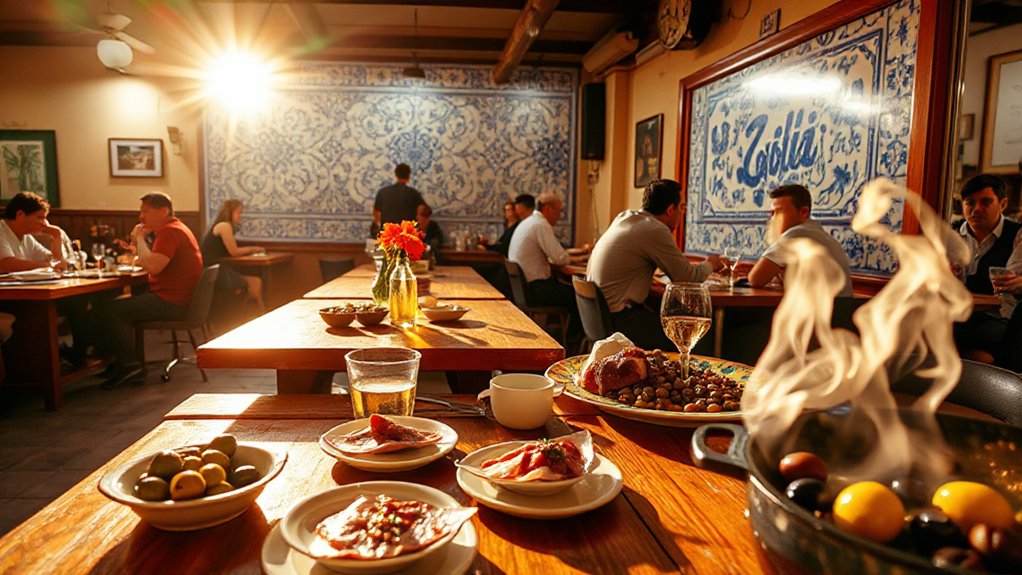
From the scent of sizzling garlic to the clink of small glasses, tapas pull you into the social rhythm of Andalusian life. You wander from bar to bar, choosing bites that pair with conversation, and suddenly you’re part of a shared table rather than a lone diner.
Each dish is a micro-story, a shortcut into local memory and place. You notice how culinary traditions thread through every choice—paprika kisses, olive oil gleam, and grilled sardines singing beneath lemon.
You sense artistic expressions in the plating, the quick choreography of cooks, and the way neighbors debate the best version of a tortilla.
Tapas become more than food; they’re a living map of culture, invitation, and connection.
Holy Week and Patron Fiestas: Rituals in Daily Life
Holy Week and Patron Fiestas unfold like a pulse you can feel in the streets: processions drift by with candlelight and brass, while neighbors pause to swap plans and prayers in the shadow of ornate pasos. You move with the crowd, tasting smoke, incense, and citrus, noticing how daily life continues just beneath the ceremony.
Festive parades braid devotion with neighborhood pride, and streets become stages for memory and renewal. You witness intimate acts—families pin a rosary, friends share a joke, a child offers flowers—quiet acts that underscore faith as daily rhythm.
Traditional dances echo in courtyards and plazas, inviting you to listen beyond the drums and bells.
- Festive parades
- traditional dances
- communal rituals
Markets, Olive Oil, and Harvest-to-Table Gastronomy
Vendors frenzy around wooden stalls, where ripe olives gleam like dark coins and baskets of bright citrus nod to the season, and you sense the region’s pulse in every whorl of steam and scent.
In local markets, locals linger over a glossy lane of olive oil, peppery and bright, each bottle promising a story. You notice olive oil drizzle on bread, a zesty kick of lemon, and the way vendors trade quick tips for perfect textures.
Harvest-to-table sensibilities shape chatter as cooks scout herbs, tomatoes, and greens, imagining a meal already in progress. The air tastes of sunlit groves and rural labor, a tangible promise that tradition seasons every bite and nourishes the day.
You taste, you linger, you return.
Arts and Crafts: Pottery, Ceramics, and Leatherwork
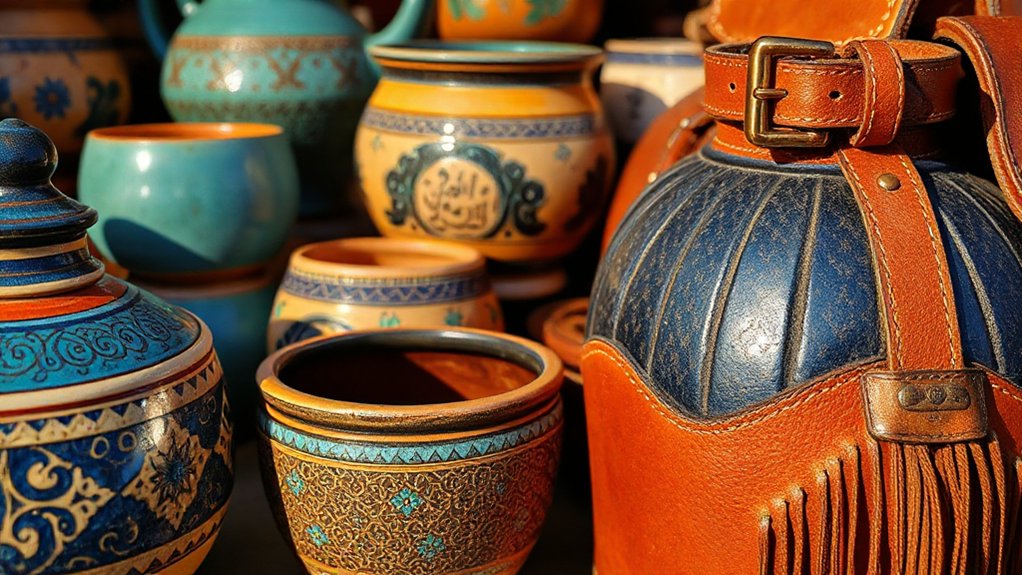
Pottery wheels hum softly in studios where clay still carries the smell of earth, and leather stamps wait their turn to press a mark into fresh wares. You notice how hands study texture, how glazes shift with light, and how pottery traditions blend function with art.
In workshops, scent and sound fuse into memory, guiding your gaze from wheel to display rack, where leather craftsmanship meets practical elegance.
- Pottery traditions showcase centuries of technique, from shaping to glaze secrets
- Leatherwork displays meticulous stamping, stitching, and finishing that endure
- Ceramics reveal color, form, and utility harmonized with regional aesthetics
You walk slowly, savoring the craft’s quiet dialogue between earth, hide, and design, feeling an Andalusian lineage breathe through each piece.
Music Beyond Flamenco: Regional Tunes and Today’s Scene
Music in Andalusia stretches beyond flamenco into a tapestry of regional sounds that echo street corners, seaside winds, and hilltop fiestas. You notice how regional melodies drift through narrow lanes, stitching together gypsy brass, Andalusian folk, and modern hybrids.
The scene feels alive: your ears catch call-and-response vocals, handclaps, and subtle percussion shaping evenings in plazas. Contemporary artists blend tradition with global textures, crafting songs that stay rooted yet push outward.
You’re invited to hear moments of quiet sorrow, sunlit warmth, and tentative experiment—all coexisting as a shared soundtrack. This isn’t nostalgia; it’s a living dialogue.
You leave with a sense that regional tunes carry today’s pulse, inviting you to explore further, curiosity sharpened, tempo tuned.
Museums and Archives: History Living Today
Touring Andalusia’s streets, you’ll notice how memory sits in plain sight—displayed in glass cases, mounted on walls, whispered in curatorial notes. Museums and archives keep history alive, inviting you to touch the present through yesterday’s artifacts.
You move between rooms where Contemporary art conversations intersect with Literary heritage, and every object becomes a doorway to another era. You hear the hum of restoration, the careful labeling, the quiet debates over interpretation. The experience feels intimate, almost tactile, as if history leans in to speak directly to you.
- Modern pieces sit beside old manuscripts, inviting fresh readings
- Handwritten notes illuminate public archives and private diaries
- Temporary exhibits frame timeless stories in new contexts
Planning Your Andalusia Cultural Journey: Routes, Seasons, Tips
Ready your itinerary with a clear beat: Andalusia rewards deliberate pacing, matching slow mornings in whitewashed towns with electric nights in historic plazas. You map routes that balance mountaintop views with river towns, choosing humane distances so you never rush the magic.
Consider seasons: spring blossoms, autumn harvests, winter mildness, summer’s heat tempered by coastal breezes. Plan pauses for local cuisine, sipping verdi coffee and tasting fresh seafood along the coast, then savoring stews and saffron in inland taverns.
Align travel with traditional festivals to feel culture pulse, from flamenco nights to Moorish fairs. Pack flexible days for serendipity—a hidden courtyard, a quiet chapel, a sunlit patio.
Leave room for late conversations, early museum lines, and memory-making detours.
Frequently Asked Questions
When Is the Best Time to Experience Andalusian Culture Festivals?
You’ll catch Seasonal festivities most vividly in spring and autumn, when crowds gather for lively parades and revelry, savoring Cultural traditions that pulse through streets, plazas, and markets, as locals celebrate history, faith, and community with glowing, unforgettable warmth.
How Can I Visit All Major Sites Efficiently on Foot or by Transit?
Plan a compact route by foot or transit, prioritizing Historical landmarks and Local markets, so you breeze between sites, soak textures, and stay observant; you’ll savor plazas, arches, tapas, and whispers of history as you move.
Which Local Crafts Are Best to Buy as Authentic Souvenirs?
Choose Traditional pottery and Handwoven textiles as authentic souvenirs, you’ll feel regional craft in your hands and home. You notice earthy glazes, rhythmic looms, and stories woven into every piece, shaping memories you’ll carry from Andalusia.
Are There Safe, Authentic Flamenco Experiences for First-Timers?
Yes—you’ll find safe, authentic Flamenco experiences when you pick reputable venues; coincidences guide you to genuine shows. You’ll witness Flamenco dance and Authentic performances that feel intimate, respectful, and vividly immersive, leaving you inspired and moved.
How Do Andalusian Religious Processions Influence City Travel Plans?
Religious processions shape your city travel plans; you’ll time visits to avoid crowds and witness local procession symbolism up close. You’ll study religious procession routes, noting street closures, detours, and the intimate, ceremonial rhythm woven into Andalusia.
Conclusion
You’ll leave with a pocket full of textures: citrus air, stone sunlight, and songs that cling to your skin. Andalusia isn’t just a trip; it’s a doorway you walk through backwards, discovering more than you planned in every alley and plaza. The Alhambra’s shadows, the Mezquita’s whispers, and craft shops that hum with craft will haunt you sweetly. If you’re listening, the region will unfold, one unforgettable heartbeat at a time—an epic you carry home in your luggage and your heart.