
From Córdoba’s city centre, you’ll frame light like a painter: start at Mezquita arches where horseshoe curves cast rhythmic shadows, then drift to whitewashed callejas whose walls blush with color and jasmine-scented air. Spin through textured patios—lime wash, moss, ceramic glints—and end along the Guadalquivir at sunset, when bridges become lines of gold. Let iron balconies and Moorish corridors guide your eye, and across each shot, let daily life and quiet moments breathe. You’ll discover more as you keep exploring.
Key Takeaways
- Mezquita arches: capture light, shadow, and horseshoe geometry for dramatic rhythm and depth.
- Whitewashed callejas: narrow walls, jasmine, colorful mosaics, and intimate perspectives with soft sun.
- Patios and courtyards: textured plaster, tiled floors, potted plants, and moss for tactile mood.
- Guadalquivir viewpoints: golden-hour river reflections, silhouettes, and warm bridge lines.
- Street life corners: market color, café steam, candid faces, and daily rituals framed by arches.
Why Córdoba’s City Centre Is a Photographer’s Dream
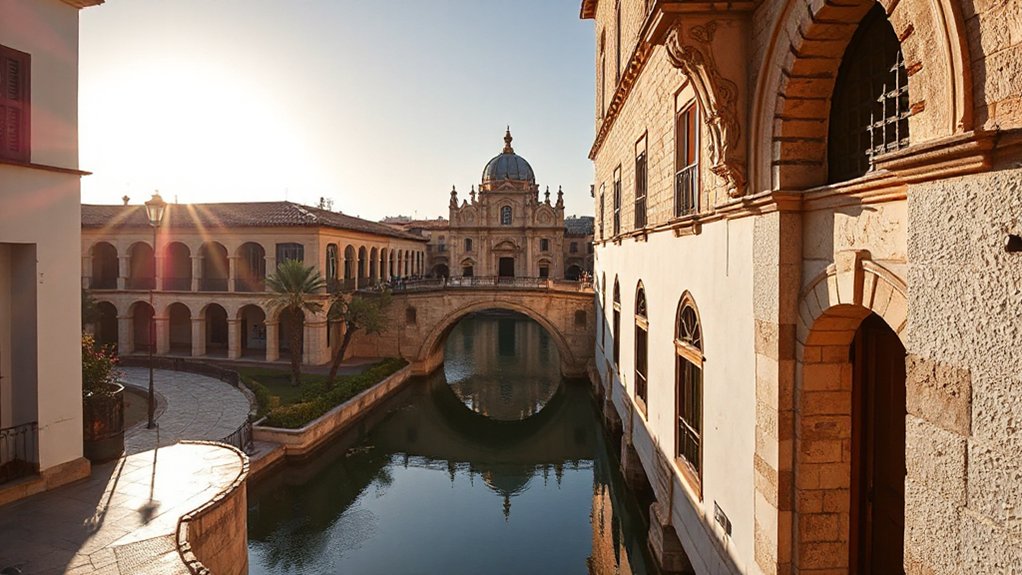
Córdoba’s city centre feels like a living postcard, where every street invites a new frame and every corner seems arranged for the perfect light. You move with intention, letting composition guide you through a pulse of textures—warm stucco, tiled courtyards, the soft reverberation of footfalls.
Your lens catches the rhythm of Cultural traditions in doorways, plazas, and shaded alleys, where stories tighten into quiet angles. Local festivals color the evenings, banners fluttering like brushstrokes, lanterns tracing curved lines above cobbles.
You frame contrast between architectural restraint and spontaneous charm, seeking lines that lead the eye toward hidden details: a wrought-iron balcony, a sunlit fountain, a cat paused on a windowsill. The city invites restraint and momentary awe, revealing itself in precise, fleeting frames.
Mezquita Arches: Light, Shadow, and Geometry
The Mezquita’s arches unfold like a well-tuned frame: light spills along horseshoe curves, casting long, precise shadows that map the stone’s geometry. You step inside and become part of a measured composition, where each arch frames the next with calculated patience.
Shadow play scrolls across columns, revealing rhythm in the repeating curves and the subtle texture of brick and plaster. The geometry feels intentional, a quiet score you can read as you move, pausing to study line, proportion, and cadence.
From ground to vault, light builds depth, heightening mood without shouting. You perceive a deliberate balance: a geometric harmony that guides your eye, inviting you to photograph not just form, but feeling.
Whitewashed Callejas: Color, Flowers, and Intimate Walls
Whitewashed Callejas bloom with sun-soft walls that invite a closer look, as if the narrow lanes were built to frame color like a quiet painting. You step in, noting how each stroke of white frames a scene, and how color appears in small, deliberate accents.
Colorful mosaics catch the eye at discreet corners, glinting where a sunbeam lands. Fragrant jasmine drapes over balconies, its scent guiding your gaze upward and inward, toward intimate walls that hold quiet stories.
Light plays in shallow alcoves, creating a mood of calm concentration. Your perspective tightens, then widens, revealing rhythm in doorways and line against plaster.
The composition breathes, inviting you to pause, observe, and move with intention.
Patios and Courtyards: Texture in Botanical Detail
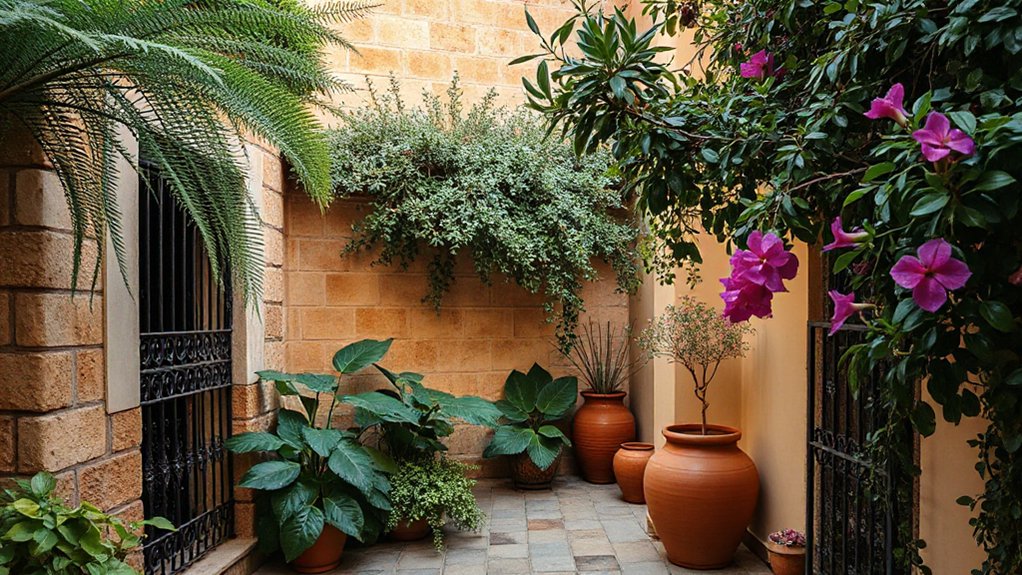
You step into a courtyard where texture tells the story—rough stucco, cool tiled floors, and woven shadows that cloak every corner.
The Botanical Texture Spotlight invites your eye to linger on leaf veins, clay pots, and moss pairing with sun-warmed stone to create a tactile chorus.
From this vantage point, every frame becomes a study in contrast and restraint, a quiet mood that language can’t quite capture.
Botanical Texture Spotlight
Texture runs through Córdoba’s patios like a quiet rhythm: the way climbing vines braid themselves up a walls, the way terra-cotta pots punctuate a gravel path, and the shimmer of leaves catching a late sun.
You study the surface pulse: bark ridges, moss fuzz, leaf veins, and the grain of wooden benches, all weaving into botanical textures that feel tactile even before you touch.
The composition guides your eye along slender shadows, framing air and water in small vignettes.
Natural patterns emerge in lacework foliage and spotted relief on stone, each micro-scene echoing a larger courtyard mood.
You notice detail as a language, where texture becomes the quiet voice that shapes the scene.
Courtyard Color Details
Color threads weave through Córdoba’s patios as sunlight curls around ironwork and terracotta. You notice color harmony shaping the scene: walls blush pale, tiles deepen cobalt, and bougainvillea punctuates a quiet rhythm of shade and glow.
This is courtyard architecture in texture, where pigment weight guides your eye along narrow corridors and into shaded alcoves. You frame a doorway so the warm brick foreground contrasts with a cool interior blue; the balance feels deliberate, almost musical.
Every surface reflects intention: a lime wash catching the light, a mossy seam at a corner, a ceramic plaque glinting under a lazy beam. You sense mood through hue shifts, the way color governs perspective, texture, and calm in this intimate, sunlit vertebra of the city.
Guadalquivir Viewpoints: Sunset Over the River
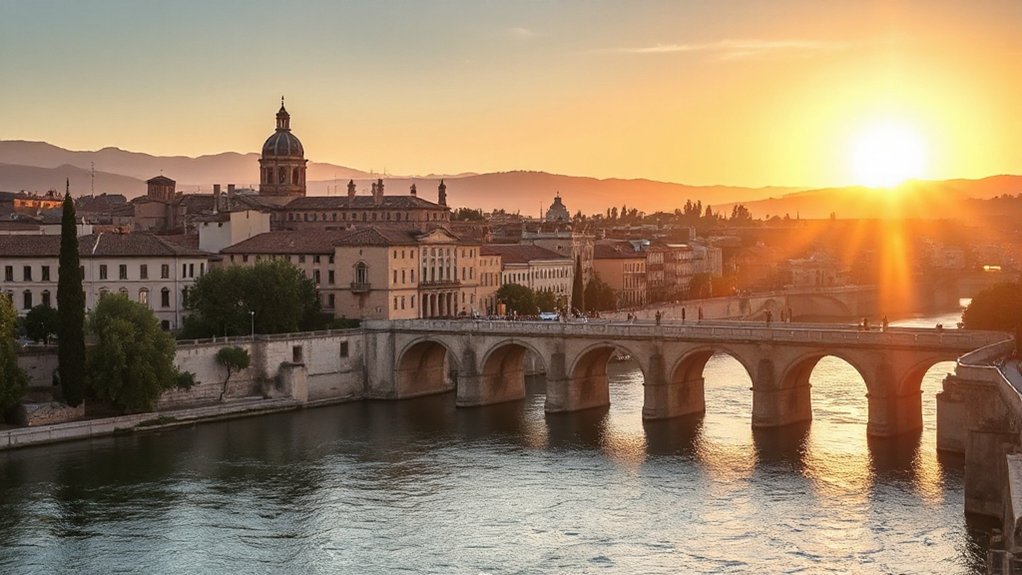
You stand at the riverbank as the sun tips toward the horizon, turning the Guadalquivir into a ribbon of gold.
You frame silhouettes against the fading light, watching bridges become lines of warmth and reflections ripple like quiet poetry.
You’ll notice how the scene invites you to pause, study the color shifts, and choose your own focus in this golden hour.
Sunset River Silhouettes
As the Guadalquivir settles into copper and rose, the city pivots toward the sunset, and you’ll find silhouettes forming along its banks, crisp against the fading light.
You center your eye on the water’s edge, where the river becomes a silvered mirror and the skyline narrows to bold outlines. Framing matters: a tree’s silhouette, a church tower, a bridge column, each element standing in quiet contrast to the glow.
Light guides your composition, carving depth from distance and texture from stillness. You sense mood rising with the sun—warm, contemplative, almost whispered.
Night reflections emerge as the river darkens, and shadow play skims the surface, inviting you to pause, observe, and capture the moment from a precise, intimate perspective.
Bridgeline Golden Hour
From the river’s edge, the Guadalquivir becomes a ribbon of gold as the sun nears the horizon, inviting you to frame the city’s bridges in their most forgiving light. You slow, eye to viewfinder, letting the Golden hour soften steel and stone.
The bridges glow with quiet authority, their silhouettes etched against a warm wash that deepens every detail: arches, cables, railings, river current catching a copper spark. Framing matters here; you tilt, pan, and wait for a lull in boat wake to steady your composition.
Perspective shifts as the skyline breathes, revealing how lines converge toward the far bank. Mood settles into patience, and you capture a moment where structure and atmosphere become one.
Bridges glow, memory tightens, Córdoba smiles.
Reflections By Río Guadalquivir
Reflections ripple along the Guadalquivir as the sun sinks, turning the water into a mirror that doubles the city’s silhouettes. You step to the riverbank, feel the breeze carry citrus notes, and frame the scene with deliberate, calm precision.
The sky loosens from cobalt to amber, then to rose, guiding your eye along the water’s edge where stone bridges sketch clean lines against the glow. Each angle reveals a different mood: the cathedral’s spire rising, boats drifting, silhouettes pressed against a liquid canvas.
You work the composition, balancing light and shadow, letting urban reflections multiply without distraction. In this moment, river serenity foregrounds your perspective, inviting a quiet reverence for Córdoba’s nocturnal glow.
Historic Facades and Doors: Color, Texture, and History
Tumble through Córdoba’s city center and you’ll notice how facades tell a story: limewashed walls, sun-washed bricks, and doors painted in blues, yellows, and terracotta that catch the light just so. You move along a quiet street, where every surface feels intentional, a study in color palette and cadence.
The walls reveal texture in rough plaster and smooth plaster, peeled sections offering memory of ages. Architectural details—wrought iron balconies, carved frames, and tiled corners—frame your view, guiding your eye toward doorways that invite, return, and reveal.
Light sketches shadows, creating mood and depth as you shift perspective. You sense history in every crack, every color shift, a quiet dialogue between craft and time.
Alfambra Alleys: Arches and Ironwork for Framing
Alfamra’s alleys frame Córdoba’s pulse the way a photographer wields a lens: arches lean in, ironwork whispers, and every bend hints at a story just beyond sight.
You move through Alfambra’s corridors in a quiet rhythm, notes of Moorish architecture guiding your eye along rhythmic vaults and wrought borders. The arches aren’t just frames; they magnify light, casting crisp lines that cut through shade and reveal texture, patina, and grain.
Tilt your perspective to catch Alhambra reflections gliding on tile and metal, then step closer to feel the weight of history settled in each hinge and key.
Composition becomes mood: restrained, precise, and awake, inviting you to linger and read the space between form and memory.
Córdoba Street Life: Locals, Markets, and Cafés
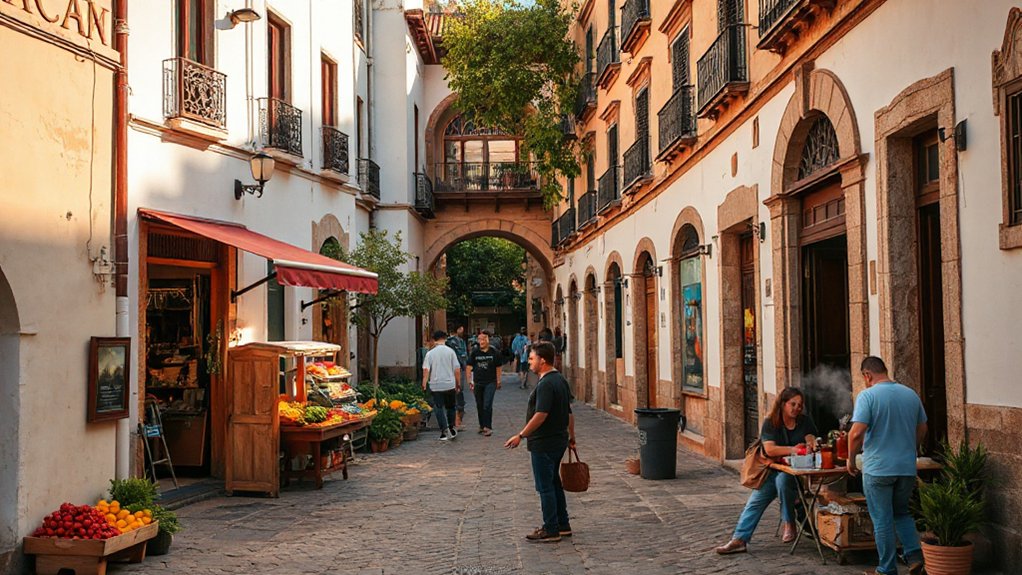
Córdoba hums with street life the moment you step outside, where markets spill color across sidewalks and cafés spill conversations into the sunshine. You move with intention, reading light like a map, noting texture in stone, fabric, and tile.
Local markets pulse at eye level—fruits, spices, and street bargains stacking stories in baskets, each vendor offering a small tell. You let the rhythm guide your frame, catching faces between arches and shadows, a pause before a bicycle bell rings.
In vibrant cafés, conversations drift, mugs clink, and steam curls into the air like a caption. The city’s mood settles around you: approachable, warm, intimate—every street a doorway to a memory, every corner a scene waiting to be photographed.
Best Times to Shoot: Light, Crowds, and Weather Tips
The light in Córdoba’s city center shifts like a good frame: start with the soft glow of early morning and let shadows lengthen as the day warms. You’ll time your shoots for Golden hour when façades glow and textures pop, then drift into the calmer midday lull to inventory angles and details.
Watch weather patterns: a high sky can flatten color, while a breeze carries dust and light drama that reshapes lines and silhouettes.
Triage crowds by choosing vantage points with built-in frames—arches, plazas, narrow lanes—early or late, never mid-crush.
Bring a polarizer for sky contrast, a tripod for steady low-light, and a plan B for sudden showers.
Adapt, wait, and mirror Córdoba’s rhythm in your frame.
How to Tell Córdoba’s Story Through Shot Sequences
You shape Córdoba’s story with sequenced visuals that move from intimate doors to sweeping streets, letting cadence guide what the viewer discovers.
Use a Cordoba Story Cadence that rises, rests, then reveals, so each frame feels intentional and connected.
Focus on composition, light, and perspective to weave mood and detail into a coherent, breathing sequence.
Sequenced Visual Narratives
Shoot from eye level to ground level, then climb slightly for a plan that reveals texture, shadows, and the quiet pause before movement returns. Framing matters: a doorway framed by ironwork, a tiled floor leading toward a colonnade, a bell tower peeking above rooftops.
Capture mood with tempo—a quick sequence for bustle, a still for reverence, a lingering shot for memory. Include Local cuisine as atmosphere: a café window, steam curling, a spoon clinking, cyclists passing with the scent of citrus in the air.
Cordoba Story Cadence
Córdoba tells its story through a rhythm of moving frames: you ride the street, catching light as it shifts from stone to brick, from courtyard to plaza. You pace a sequence, not a single shot, letting timing dictate emotion.
Begin with a doorway study, then sweep to a street’s wavering shadows, so the eye travels with your breath. Use narrow corridors to frame a bell tower against pale plaster, then pull back to reveal the square’s human pulse.
The cadence relies on cultural heritage as a quiet metronome, guiding shifts from dawn to dusk. Let urban contrasts sharpen perception: a marble threshold beside weathered tile, a horse bell near a modern cafe.
End with a wide, reflective sky, uniting detail and mood.
Frequently Asked Questions
How to Balance History and Modern Life in Photos?
You balance history and modern life by framing urban decay beside gleaming façades, capturing historical contrast with deliberate perspective, mood, and light; you compose scenes to highlight texture, detail, and rhythm, letting present and past breathe in balance.
Which Spots Are Best for Candid Street Portraits?
Candid street portraits shine where you linger: tap a moment by local street vendors, catching smiles in vibrant alleyways. Frame them with light, mood, and perspective—keep detail tight, let composition guide your eye, and you’ll feel electric.
What Gear Helps Capture Córdoba’s Textures Best?
You’ll use Lighting techniques and Lens selection to capture Córdoba’s textures, selecting angles that emphasize composition, light, framing, mood, perspective, and detail, while you move, adjust, and trust your eye to tell tactile stories.
How to Photograph Interiors Without Crowds?
To photograph interiors without crowds, plan shoots during off-hours and use long exposures to smooth movement. Lighting techniques guide mood; composition tips frame details, angles, and reflections, emphasizing quiet spaces. You’ll capture intimate, serene perspectives with deliberate framing.
Where to Find Hidden Viewpoints Away From Tourists?
You’ll find hidden viewpoints by wandering alleyway secrets and rooftop vistas, where composition guides your eye. You frame light with intent, feel mood shift, and adjust perspective until detail reveals itself, inviting you to shoot moments others overlook.
Conclusion
In Córdoba’s heart, light and stone whisper contrasting tales. Where quiet arches cradle shadow, crowds spark color—a duet of hush and hum. You’ll frame the Mezquita’s symmetry against a sunlit alley’s imperfect charm, chase a whitewashed wall as it blushes pink at sunset, and let a courtyard’s stillness meet busy market chatter. Juxtaposition becomes your lens: order and chaos, permanence and moment, threading a story that feels both intimate and grand. Your sequence ends, but the city lingers.