
Seville’s historic districts feel magical as you wander narrow lanes, white-washed walls, and orange courtyards, where Moorish echoes meet Gothic craftsmanship. You’ll trace a living archive in doors, street names, and shopfronts that whisper tradition, and taste seasonal flavors tucked into courtyards and plazas. The Gothic-core landmarks and serene Moorish patios reveal layered histories through tilework, water, and light. Plan a mood-driven loop, savor golden-hour façades, and discover intimate streets—and there’s more to uncover if you continue exploring.
Key Takeaways
- Explore Seville’s historic districts on foot to absorb their narrow lanes, white-washed walls, orange trees, and sensory textures that define beauty.
- Seek Gothic core structures, grand façades, and courtyards with carved details as tangible links to the city’s history.
- Discover Moorish-influenced patios and tilework revealing water, shade, and intimate, memory-keeping spaces.
- Experience time through golden-hour glow, sunset plazas, and reflections that transform façades into living archives.
- Plan a flexible, hour-by-hour route: choose districts by mood, map loops, include culinary stops, and allow buffers for discovery.
Why Seville’s Historic Districts Feel Magical
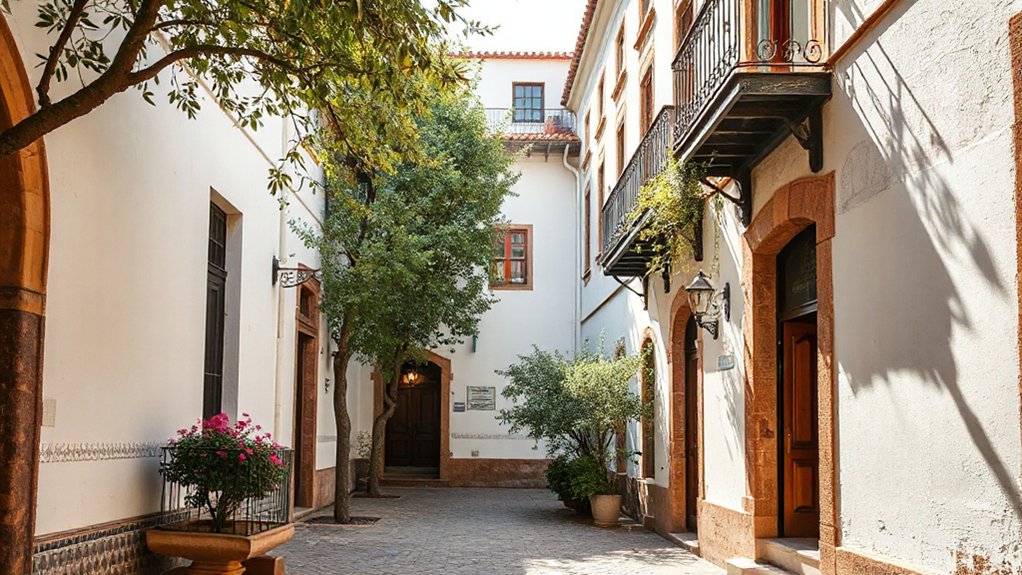
Seville’s historic districts feel magical because they compress time without forcing you to rush through it: narrow lanes, white-washed walls, and orange trees create a living map where centuries lean into each step.
You move with intent, noticing how Cultural festivals thread through courtyards and plazas, leaving faint echoes in the stone. The cadence is archival: doors poised like testimonies, street names annotating memory, shopfronts a ledger of craft.
Local artisans populate the seams between eras, their hands shaping patterns that whisper of import and improvidence alike. Each corner offers a crisp, precise detail, a fragment that aligns with the whole map.
This cohesion invites you to witness continuity—without erasing change—as you wander, listening for the city’s quiet, practiced heartbeat.
Gothic-and-Mrena Core: Must-See Landmarks in the Old Town
You’ll map the Gothic Core landmarks against the old town’s stone grid, noting how each silhouette tells a distinct chapter of Seville’s era.
From Minerva-Style Cathedral highlights to the tight rhythm of flying buttresses, these structures anchor the street-scale story you’re about to unfold.
This is your starting point for a precise, archival look at how form, function, and faith converge in the heart of the historic center.
Gothic Core Landmarks
What makes Seville’s Gothic core endure as the city’s oldest heartbeat isn’t just its stone but the way time pierces through its facades. You walk through narrow lanes and feel the cadence of medieval architecture, carved details guiding your gaze. This is where the city preserves memory, not with grand proclamations but with quiet, relentless lineage.
You notice evidence of local artisan workshops in hidden guild marks, tools, and patinated surfaces that whisper of hands at work across centuries.
- The austere vaults and pointed arches that frame your path
- Guild symbols tucked above doors, echoing craft without noise
- Courtyards where time and plaster converge, revealing enduring craft
Minerva-Style Cathedral Highlights
Minerva-Style cathedrals in the old town fuse Gothic verticality with an almost syncretic Me(r)na-leaning grace, where spires pin the sky and interior spaces draw order from sculpted panels and austere ribbing. You walk through arches that whisper of centuries of power, noting how each bay channels light like archival evidence.
The Minerva style cathedral reveals intentional symbolism in its tracery, fonts, and altars, a built dossier of faith and authority. You track motifs of protection and learning, recognizing architectural symbolism as a language that communicates beyond words.
In these spaces, history isn’t raw stone but curated memory, guiding you to see Seville’s old town as a living archive of devotion, politics, and craft.
Moorish Echoes: Patios and Tilework to Seek
From the labyrinth of Seville’s streets, the Moorish echoes arrive most vividly in their patios and tilework, where every courtyard tells a compact story of empires and lives lived in shade. You trace patterns that whisper of Moorish architecture, where water, shade, and geometry govern space, and tile craftsmanship records hands and time.
Each patio becomes a compact archive, preserving rituals, affinities, and passages between eras with quiet authority.
- Observe how patterned tiles encode routes between sacred and domestic spaces, revealing cultural crossroads.
- Note the interplay of light, water, and shadow, which preserves memory while shaping perception.
- Compare courtyard layouts to documentary fragments, each a precise, durable record of a layered past.
Golden Hour Moments: Façades and Plazas at Sunset
As the sun sinks, you witness Golden Hour Facades wash in warmer tones, turning stone and plaster into quiet archives of light.
The Sunset Plaza Auras rise from corners and courtyards, guiding your gaze along pathways that have long framed social life in Seville.
In these Veiled Light Moments, you sense how façades and plazas converse, each glow hinting at histories yet to be told.
Golden Hour Facades
Golden Hour transforms Seville’s façades into living archival pages, where the fading sun laces each corner with a memory of stone and tile. You move with intent, tracing rhythms of medieval architecture as glow and shadow reveal their quiet verb: histories speaking through brick, plaster, and ironwork.
The city exhales, and vibrant street art peeks through historical skin, a dialogue between eras that keeps time honest.
- Observe how contour and color synchronize, exposing layers you can read like a catalog of craft.
- Note the tension between preservation and breath, where light edits details rather than erases them.
- Let the scene resolve into a cohesive message about memory, place, and meaning.
Sunset Plaza Auras
Sunset Plaza gathers the last light like a curator arranging specimens: façades tilt toward the horizon, balconies hold their breath, and plazas convert heat into color.
You walk the edge where stone meets shadow, noting textures that register in real time: limestone edges catching ember hues, tile mosaics aligning with fading gold.
The evening ambiance threads through doors left ajar, through chatter muted by the city’s dimming chorus.
You record how reflections slide along fountain basins, how ironwork frames apricot skies, how a clock-tower bell tolls softly as the light cools.
This isn’t spectacle but sequence—an archival moment where memory preserves a hue, a temperature, a pedestrian pause that feels like a learned sigh.
Sunset plaza, remembered as seasonable calm.
Veiled Light Moments
Veiled light folds over the façades and plazas as the golden hour settles, turning edges to ember and shadows to hush. You walk the quiet squares with intent, noting how windows glow like archival seals, preserving memory in a pale ember. The scene asks you to observe, not merely look, as nighttime illumination reveals textures you’d miss in daylight.
Every doorway holds a whispered record, a hinge creaking with local legends. You compile impressions with careful care, linking light to history, dusk to footprint, until a coherent cadence forms.
1) Watch how lamplight outlines carved stone, guiding memory without noise.
2) Listen for footsteps echoed by arches, a map of time in motion.
3) Record the stillness between sounds, the moment when history speaks.
Hidden Courtyards and Intimate Streets to Discover
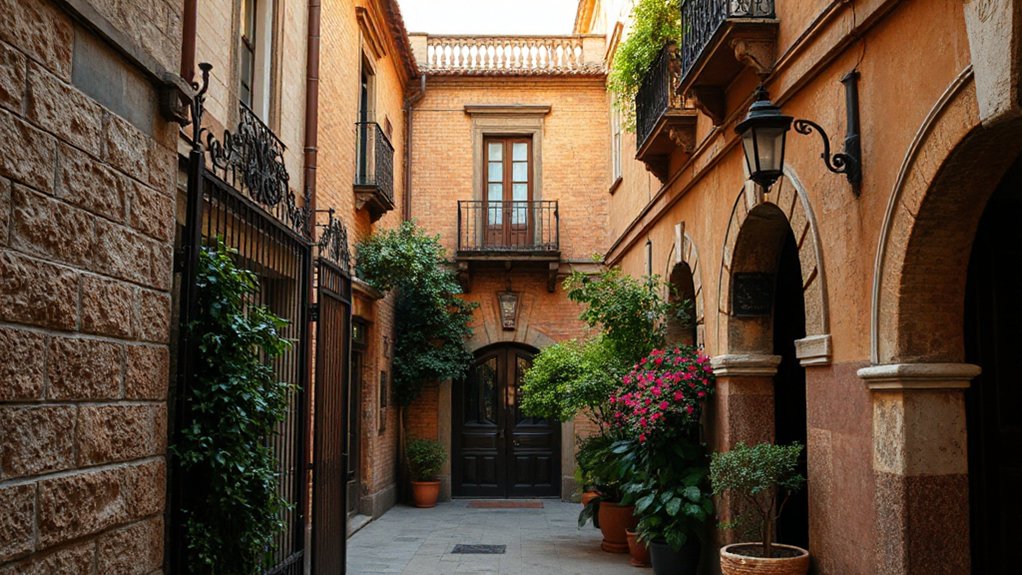
Hidden courtyards and intimate streets await just beyond Seville’s grand avenues, inviting you to step softly into a quieter record of the city. You move with purpose, tracing ironwork and shadowed arches that promise stories kept private.
This section records spaces where walls breathe history in quiet detail, not grand spectacle. You notice hosted courtyards tucked behind doors, water features that murmur like archival whispers, and tiled corners that carry signatures of former residents.
Each turn reveals hidden gems that resist crowded itineraries, inviting patient observation. Paths tighten, sunlight angles, and you compile a mental list of secret passages—shortcuts through time, not shortcuts from experience.
The rhythm stays precise, cohesive, and evocative, guiding you toward intimate understandings of Seville’s layered past.
Tapas Routes Inside the Historic Precincts
As you move from the whispered courtyards into the Historic Precincts, tapas routes emerge not as tourist maps but as living itineraries through texture and time. You’ll trace lines of aroma between centuries, where local tapas bars thread memory into every bite and hidden culinary gems reveal themselves in doorway light.
Each stop records a moment: a recipe shifted by hands, a song of pans, a story inscribed on a wooden counter. The routes aren’t fragments but a cohesive archive, curated by habit and neighborhood memory.
- Seek the intimate venues where recipes echo through generations
- Note how seasons flavor orders, revealing hidden culinary gems
- Preserve the sequence as you’d a manuscript in a cabinet of memories
Plan Your District-by-District Stroll: A Practical Guide
Begin with a practical frame: map out each district as a compact itinerary, then stitch these segments into a walkable loop that fits your pace and interests. You’ll balance time, terrain, and themes by sketching a sequence that highlights emblematic sites, plazas, and vantage points, then refine it into a cohesive circuit.
Record transit contacts, arrival windows, and rest stops so you aren’t surprised by closures or crowds. For pacing, assign each district a 60–90 minute window, leaving buffer for serendipity. Local cuisine stations along the route can punctuate your stroll without detours, while noted transportation options keep you fluid—bike rentals, trams, or short taxi hops when needed.
Archive checkpoints in your notes, preserving notes, dates, and impressions for future revisits.
Pick a District by Mood and Interests
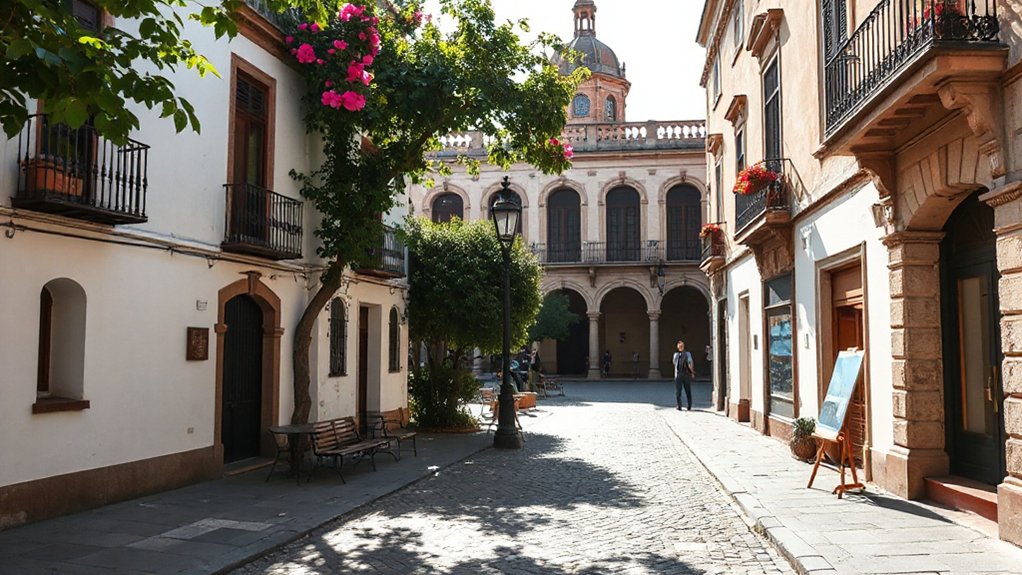
To choose a district by mood and interests, start by naming the feeling you want to chase—calm, curiosity, grand spectacle, or local color—and map districts that deliver accordingly. You’ll discover how Seville’s fabric shifts with intention, not chance, revealing a curated archive of experience. The districts speak in rhythm: stone, tile, shade, and scent, each offering a distinct, trackable signal—romantic ambiance, artistic vibes, or quiet study.
- Calm-seeking: Santa Cruz’s intimate alleys and fountain echoes invite reflective wandering.
- Curious: Triana’s crafts, river views, and flamenco pulse spark discovery and interpretation.
- Grand spectacle: Arenal’s grand façades, markets, and public performance embody drama and cohesion.
Frequently Asked Questions
How Many Days Are Ideal to Explore Seville’s Districts?
You’ll need about four to five days to explore Seville’s districts fully. You’ll savor local cuisine between visits to historical landmarks, weaving a precise narrative of streets, plazas, and neighborhoods that preserves archival insight and thematic cohesion.
Which Neighborhoods Are Best for Photography Enthusiasts?
You’ll love Seville’s hidden alleyways and vibrant street art, and you’ll notice 1 in 4 photos captures an overlooked detail. You explore neighborhoods with intent, tracing hidden alleyways, documenting vibrant street art, and savoring every atmospheric, archival moment.
Are There Guided Tours Focused on Specific Districts?
Yes, you’ll find guided tours focused on specific districts. You’ll join local culinary tours and cultural heritage walks, tracing narrow lanes, flavors, and histories, with precise storytelling that stitches districts into a cohesive, archival narrative you can follow.
Where Can I Find Authentic, Offbeat Courtyards?
You’ll uncover authentic, offbeat courtyards by wandering hidden patios tucked through Seville’s backstreets, where hidden patios reveal themselves via whispered routes from locals, and local artisans’ doors hint at private, intimate spaces you won’t find on maps.
What Are the Best Times to Visit Quieter Streets?
Best times to visit quieter streets are early mornings and late evenings, like a whisper through arches; you’ll avoid crowds, soaking in serene light, unhurried steps, and archival-feel moments that reveal Seville’s quieter, beloved corners.
Conclusion
You wander Seville’s lanes and stumble on the same brass door you forgot you noticed yesterday, and it opens to a courtyard you swear you’d dreamed about. Coincidence threads you from Moorish tiling to Gothic ribs, as if the city had saved a page just for your steps. Each plaza aligns with your mood, each sunset folds the day into memory. You close the map, then unseal a new doorway—in you, not just in the district. The magic sticks.