
In Spain, warmth isn’t a mood but a practiced rhythm you inhabit through daily gestures, listening, and attentiveness. You’ll notice hospitality flows from doorstep rituals, open homes, and shared meals where timing, eye contact, and appropriate proximity matter as much as your words. Welcome expands beyond seating to how spaces invite conversation—modular layouts, open kitchens, and permeable thresholds that encourage spontaneous contact. If you keep exploring, you’ll uncover how these microhabits map to genuine care and community.
Key Takeaways
- Hospitality in Spain is a lived ethic built through daily habits, listening, and respectful, attentive presence beyond grand gestures.
- Welcome is a practiced rhythm: small acts like coffee, seating, and shared stories signal belonging and warmth.
- Entrance design and doorstep rituals set the tone, guiding sociable movement and open, communal spaces.
- Shared meals, tapas, and seasonal hospitality encode regional identity, generosity, and timing in social gatherings.
- Modern Spanish hospitality blends casual, cafe-style tempo with deliberate space planning, inclusivity, and attentiveness to personal needs.
Embracing Spanish Hospitality: What It Really Means
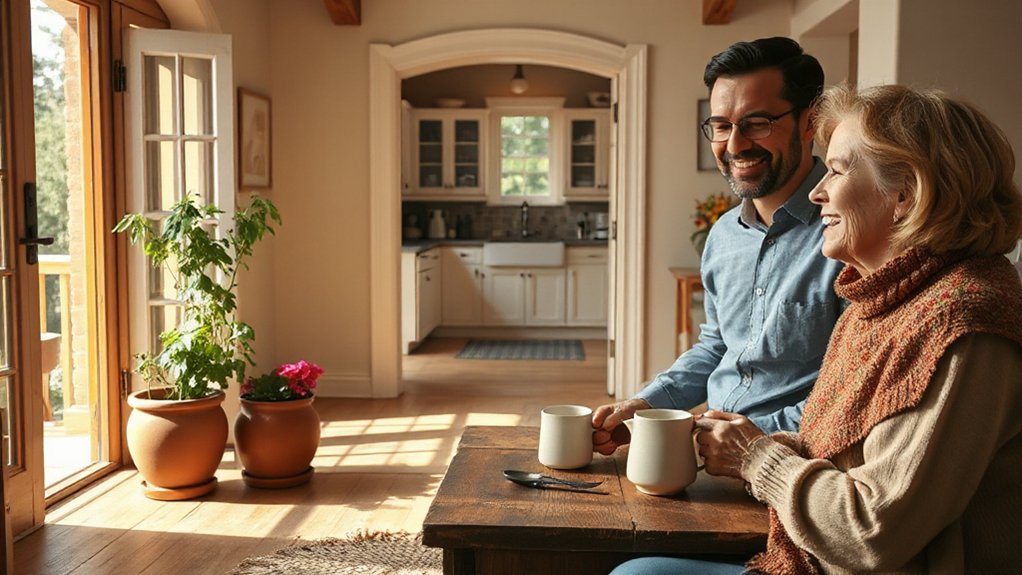
Spanish hospitality runs deeper than polite gestures; it’s a lived ethic that colors everyday encounters. You explore how warmth isn’t just kindness; it’s a framework you’re invited to inhabit, a pattern you observe, then replicate.
In this view, hospitality becomes cultural symbolism: gestures carry meanings passed through generations, signaling belonging, reciprocity, and respect. You notice the subtle rhythm of conversation, the way steps pause for shared meals, and how invitations extend beyond the moment to future days.
Language nuances shape your experience; a drop of formality can shield intimacy, while casual address invites collaboration and trust. You measure intent by attentiveness, not volume, and you calibrate expectations against communal needs.
Ultimately, embracing Spanish hospitality means aligning perception with responsibility—showing up, listening, and honoring the social fabric you’re welcomed into.
How Welcome Shows Up in Daily Life
Welcome shows up in daily life as a practiced rhythm: you notice how doors open a little wider for a guest, how a neighbor’s quick check-in becomes a thread weaving into longer conversations. You sense Cultural nuances guiding small acts, from timing to tone, shaping comfort without ceremony. Personal gestures—a shared coffee, a seat at the table, an extra blanket—signal belonging and attentiveness.
The cadence is practical, not performative, turning routine moments into microhabits of warmth that accumulate over time.
- A neighbor’s knock softens into lingered conversation over a cup.
- A friend’s plate is refilled with quiet, respectful attention.
- A guest’s jacket finds a chair, and minutes stretch into stories.
The Anatomy of a Spanish Home: From Doorstep to Dining Room
You feel the doorstep set the tone, where a ritual of greetings signals warmth and attention. As you move through the entrance, space and flow guide you, revealing how hospitality folds into everyday life.
In the dining room, social dynamics emerge from subtle cues—where conversation, appetite, and presence shape the shared rhythm from entry to table.
Doorstep Welcome Rituals
As you arrive at a home in Spain, the door opens not just to an entryway but to an explicit social ritual: the momentary choreography of greeting, where a handshake or kiss on the cheek signals warmth, familiarity, and a tacit invitation to stay. You sense the subtle timing, the pressure of social proximity, and the unspoken rule of reciprocity that follows curiosity with hospitality.
- garden decor thoughts: colors, textures, and a welcome path
- cocktail etiquette glimpses: timing, toast, and consent
- mentoring of conversation: topics, pace, and attentive listening
This doorstep exchange frames the visit, balancing formality with affection. You notice how the ritual paves ease, guiding you toward the dining room with intention.
Entrance Flow And Space
The entrance space in a Spanish home acts as a microcosm of hospitality, guiding you from threshold to living areas with deliberate rhythm. You observe how the hallway narrows, then spills into a vaulted or arched corridor, a cue that movement itself becomes part of the welcome.
Cultural symbolism imprints the path—coat hooks, tiled floors, and low benches invite shared greetings and a settled pause before deeper rooms. Architectural features matter: plaster walls, timber doors, and ironwork screens modulate light and sound, aligning privacy with sociability.
You notice how the arrangement prioritizes sightlines toward communal spaces, yet preserves intimate nooks for private chats. The flow reveals a lived philosophy: hospitality begins at the threshold, unfolds through space, and culminates in the living core.
Dining Room Social Dynamics
In Spanish homes, the dining room acts as a social engine, where meals become conversations and presence solidifies relationships. You observe how seating choices signal status, kinship, and turn-taking, shaping the tempo of the evening. The table functions as a stage for cultural symbolism, from shared tapas to toasts that bind generations.
Hospitality etiquette guides every gesture, from offering seconds to approving the final farewell hug, ensuring warmth without intrusion. You notice how conversations drift between memories and plans, while silencers can feel respectfully deliberate rather than awkward.
The room’s rhythm—pouring, passing, listening—reflects a collective patience that foregrounds guests. A well‑managed flow cultivates trust and belonging, turning everyday dining into a communal ritual.
- Seating signals hierarchy and belonging
- Toasts, passes, and pauses sustain rhythm
- Small acts affirm welcome and reciprocity
Greeting Guests Properly: The Spanish Doorstep Ritual
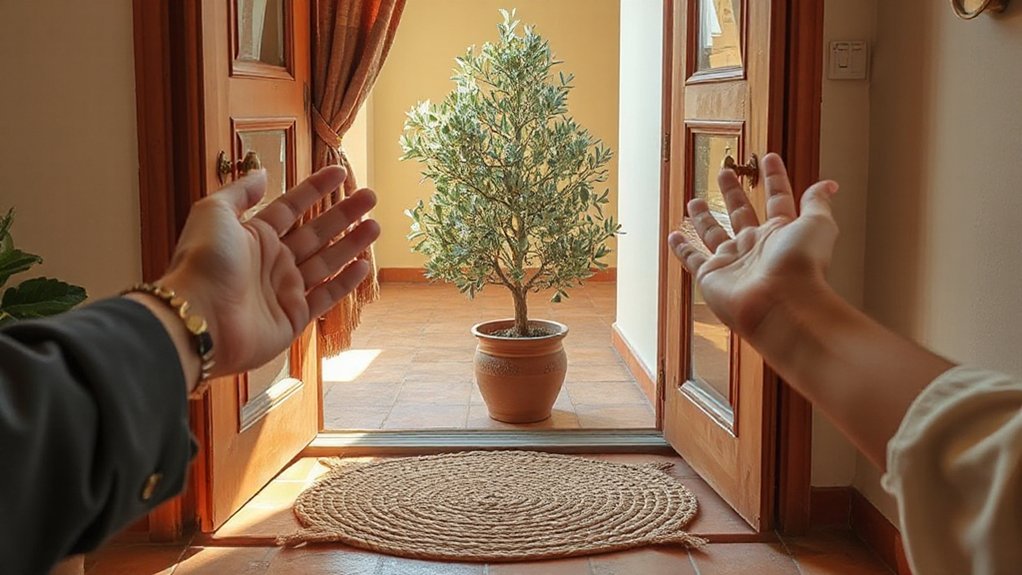
Greeting guests properly is an art of timing and presence. On the Spanish doorstep, you read the moment: a nod, a smile, a pause, then the language gestures that signal welcome without overwhelm.
You calibrate your approach to cultural nuances, recognizing how proximity, eye contact, and a light touch on the arm convey warmth without intrusion. You note the etiquette of greetings—whether a single kiss or a firm handshake—shaped by regional tastes and social context.
You reflect on how your voice lowers just enough to feel intimate, not imposing. The ritual is a microcosm of hospitality: a practiced balance between respect and openness, efficiency and ceremony, creating an immediate sense of belonging before the conversation begins.
Coffee and Conversation: The Heartbeat of a Visit
Coffee becomes your moment of connection, where a shared cup signals that you’re in a space of listening and presence. You’ll notice how stories unfold over aroma and warmth, with tea and coffee acting as bridges between people and memory.
This welcoming rhythm sets the cues for conversation that feels natural, respectful, and open to the small details that bind a visit.
Coffee as Connection
Have you ever noticed how a simple cup of coffee can do more than wake your senses? You sense the pause between pour and sip, a micro-ritual that frames intention. Coffee becomes a bridge, inviting dialogue, testing air for comfort, and signaling welcome.
You observe how memory nudges future visits, shaping how you listen, share, and respond. The ritual steadies conversation, turning small talk into connection, and every refill marks another chance to read mood and meaning.
In this light, Coffee rituals and guest etiquette become not constraints but tools for hospitality, guiding pace, warmth, and mutual regard.
- a ritualized pour, a respectful pause, a shared breath
- attentive timing, attentive listening, attentive presence
- subtle boundaries honored, curiosity welcomed, rapport built
Shared Stories Over Tea
Tea loosens the edges of a visit, inviting stories to rise beside talk and silence alike. You notice how shared stories over tea become a diagnostic of hospitality, a way to map trust without formalities.
You lean into anecdote, not argument, allowing small details to reveal larger patterns of welcome. Yet you glimpse friction: cultural misunderstandings surface when a joke lands oddly or a memory contradicts a host’s recollection, nudging conversation toward correction rather than connection.
Language barriers, subtle and stubborn, shape rhythm and meaning, slowing punchy punchlines into careful, unhurried phrases. Still, the heartbeat remains intact: tea steadies timing, listening becomes as important as speaking, and mutual curiosity transforms differences into shared texture.
In this space, warmth calibrates understanding, not erases it.
Welcoming Conversation Cues
As conversations unfold around a cup, you notice how doors open not with stories alone, but with the cues that invite them: a friendly greeting, a warm smile, a slight tilt of the head that signals interest. Welcoming conversation cues reveal cultural nuances and language cues that shape pace, tone, and comfort.
You observe how interruptions become inclusive, how proximity signals attention, and how shared humor deflates formality without erasing respect. The cadence of Spanish hospitality blends attentiveness with warmth, turning small exchanges into social bridges.
You refine your approach by listening actively, matching the host’s tempo, and acknowledging pauses as meaning rather than awkwardness.
- Gentle eye contact and nods
- Light humor that respects boundaries
- Open-ended questions inviting stories
Food as Generosity: How Meals Express Welcome
Food as generosity translates hospitality into tangible practice: when a host loads a plate or invites seconds, the meal becomes a visible pledge that the guest is valued. You observe how shared food functions as social currency, reinforcing trust and reciprocity beyond polite talk.
Meals encode cultural cues—portion sizes, sequencing of courses, and timing—so you sense a tacit map of care before words recur. You notice that generosity isn’t merely abundance; it’s attentiveness: selecting dishes that honor preferences, enabling seconds, and adjusting servings to pace conversation.
Cultural symbolism surfaces in aromas, textures, and color contrasts, guiding mood and focus. Traditional decor frames these exchanges, anchoring ritual in familiar aesthetics while the plate becomes a dynamic message of welcome.
Tapas and Tiny Hosts: Small Plates, Big Hospitality
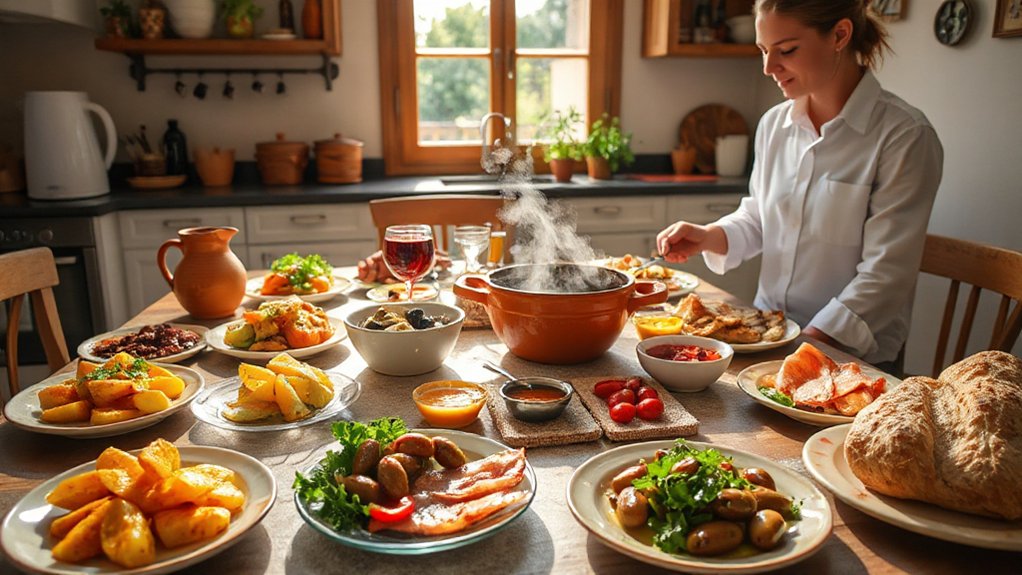
Tiny plates reshape the tempo of hospitality, turning appetite into a microcosm of care. You test textures and flavors, noticing how small portions map big intentions, a practical theater of welcome. Tapas become social glue, a choreography where Folk traditions surface in shared bites and eye contact, yet adapt to your table’s pace.
You sense how Festive rituals thread through every assortment, inviting conversation as much as chewing. The host’s restraint—offering, not overpowering—speaks volumes about trust and attentiveness.
- Lacy fried peppers glisten beside sherry-flecked olives, signaling generosity
- Skewered seafood arrives with citrus wink, a hinge between sea and sensation
- A ceramic bowl of warm almonds invites lingering, ritualized hospitality
Regional Welcomes: A Quick Map of Local Styles
Regional welcomes in Spain vary by coast, plateau, and city, revealing how local rhythms shape hospitality—from the sauntering tapas bars of Seville to the crisp hospitality of Pamplona’s pintxos spots and the sea-salted warmth of Galicia.
You map those textures quickly, noticing that Cultural influences seep into daily routines, from greetings to service tempo. In the Basque zones, you feel a brisk efficiency that still prioritizes sociability, while in Galicia you sense a slower, maritime courtesy.
Architectural styles frame the welcome: arched doorways, stonework, tilework, and courtyards that invite lingering conversations. The contrast across regions isn’t just scenery; it’s a system of signals that guides expectations, reciprocity, and comfort, enabling a host-guest rapport that travels well.
When to Leave: Timing and Thanks in Spanish Hosting
As you move from mapping regional welcomes to the rhythms of Spanish hosting, timing becomes a practical measure of respect and comfort. You sense when the gathering has leaned toward warmth over formality, and you adjust, signaling departure with grace rather than abruptness.
In this space, Cultural nuances guide you: a lingering presence may be welcome, but not obligatory, and a final, sincere thanks seals good feeling without pressure.
Gift exchanges appear as thoughtful coda, simple tokens that acknowledge hospitality without turning the moment transactional.
- A brief, heartfelt thanks as you rise
- A small token or return gesture, matched to the host’s style
- A courteous invitation for future gatherings, without insistence
Balancing Privacy and Proximity at Home
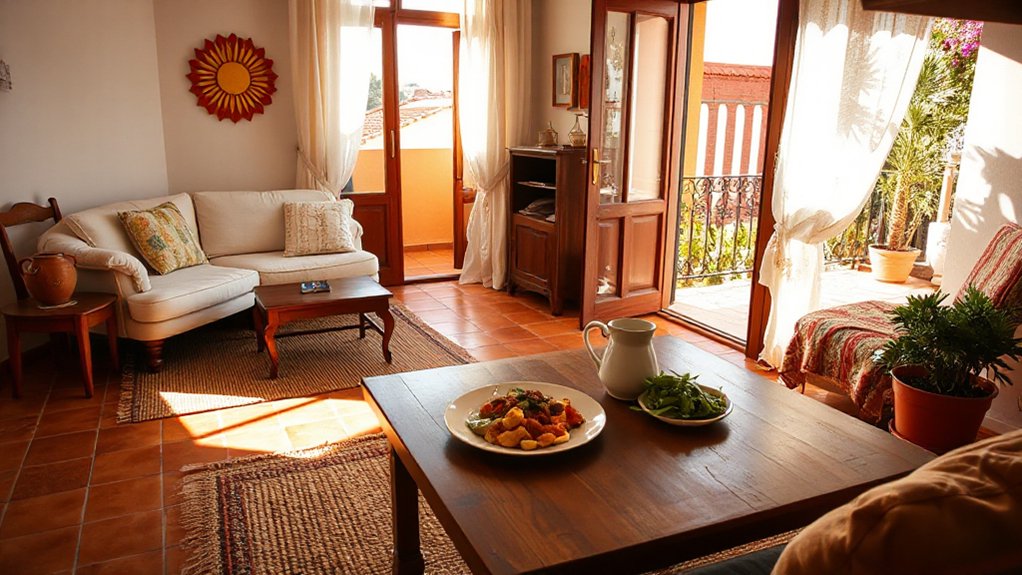
You weigh privacy against closeness when guests share your home, and you notice how shared spaces shape comfort for everyone involved.
As you observe boundaries—silent signals, door closures, and timing—you start to see how proximity can feel welcoming or confining, depending on context.
This balance invites you to articulate expectations clearly while remaining attentive to how warmth and personal space coexist.
Privacy Versus Closeness
Balancing privacy and proximity at home is less about choosing between seclusion and sociability and more about calibrating boundaries to fit daily routines and relationships. You observe how privacy boundaries shape comfort, while proximity invites warmth.
When you invite guests, you maintain personal space without closing off connection, preserving trust and ease. The dynamic rests on perception: what feels intimate to one person may feel invasive to another, so you renegotiate in small, deliberate steps.
- A door cracked for welcome, not a breach of routine
- Shared meals that honor personal space yet celebrate belonging
- Quiet corners kept for focus amid lively conversation
You refine how you distribute rooms, screens, and schedules, crafting a rhythm that honors both privacy and closeness.
Shared Space Boundaries
Shared spaces at home demand boundaries that adapt to daily rhythms while inviting connection. You navigate a balance between hospitality and privacy, noticing how doors, seating, and routines signal availability.
In practice, personal space isn’t a rigid wall but a flexible perimeter, shifting with guests, moods, and tasks. You observe how shared areas invite proximity—conversation in the kitchen, shared meals, casual lounging—yet you sense cues to retreat when focus or quiet is needed.
Boundary respect becomes a daily negotiation: you honor others’ needs for concentration and rest while inviting warmth and inclusion. You articulate expectations clearly, adjust habits, and monitor energy, ensuring the home remains inviting without eroding autonomy.
The result is a calibrated tempo of togetherness.
Hospitable on a Budget: Warmth Without Waste
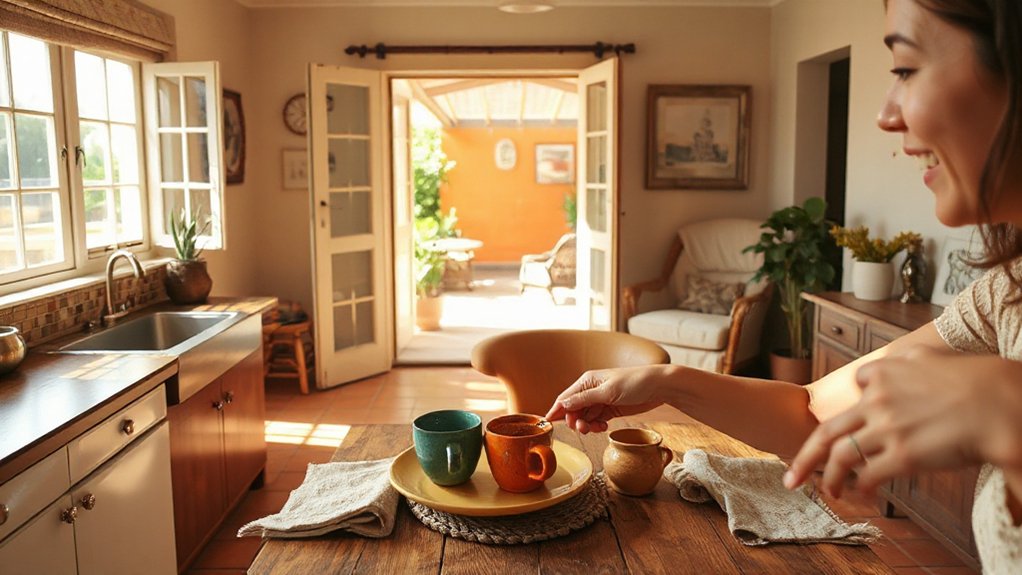
How can warmth flourish on a budget without waste? You’ll notice that hospitality here hinges on intention, not expense, and that small, culturally meaningful choices carry weight. By leaning into Cultural nuances and using Traditional symbols thoughtfully, you communicate care without splurging.
Your guests feel seen through simple, repeatable gestures rather than lavish expenditures.
- An economy-driven aroma: coffee and citrus, shared at a sturdy table
- Handwritten notes on simple napkins, reflecting regional phrasing
- A single, well-placed item that evokes memory and belonging
You evaluate what truly matters, cutting waste without sacrificing welcome. Your method is iterative: observe responses, refine rituals, honor local customs, and stay mindful of budget.
The result is a warm, efficient hospitality that respects both people and resources.
Modern Twists: How Younger Spaniards Reimagine Welcoming
You’re watching how Casual Gatherings, once intimate, now pulse with a Modern Vibe that blends tech, playlists, and spontaneous welcomes.
Shared Spaces Reimagined reflect a shift in space use and hospitality norms, while Generational Hospitality Shifts reveal how younger Spaniards redefine warmth through flexibility and collaboration.
This framing invites you to contemplate how these currents shape everyday welcome, from neighborhood chats to cross-generational hosting rituals.
Casual Gatherings, Modern Vibe
Casual gatherings in Spain today blend a relaxed, cafe-society tempo with a sharper, more deliberate sense of space and time. You sense how the vibe foregrounds choice, pacing, and the micro-politics of seating, timing, and topic.
The younger approach minimizes formality while maximizing warmth, using small acts to read trust and belonging. You notice casual attire signals openness, while outdoor settings invite daylight, air, and sociability to fuse with intention.
- A lounge-chair chorus under string lights, where conversations drift and settle
- A street-side picnic of tapas and iced drinks, improvised yet precise
- A courtyard corner that rearranges itself around who arrives next
This mix favors efficiency, inclusivity, and visual rhythm, shaping hospitality as a practiced, communal clock.
Shared Spaces Reimagined
What happens when shared spaces stop being static venues and start behaving like living arrangements? You observe how younger Spaniards remix interiors into fluid social stages, where dining, work, and play blend without rigid boundaries.
Spaces become adaptable scripts: modular furniture, open-plan zones, and responsive acoustics that cue comfort and conversation. You notice how Cultural influences surface in color palettes, textures, and artifacts drawn from global and local traditions, signaling inclusive hospitality without trumpeting tradition.
Architectural styles merge: light-filled courtyards, terraces, and ceiling lines that invite contact while preserving privacy. The result is a pragmatic warmth—hospitality as utility—where hosting feels intentional, not performative.
You sense a shift toward intimate, permeable environments that welcome evolutions in rhythm, space, and sociability.
Generational Hospitality Shifts
Generational hospitality in contemporary Spain reworks welcome as a negotiated practice among friends, roommates, and neighbors rather than a fixed ceremony. You observe how younger Spaniards blend tradition with pragmatism, shaping rituals around daily life and shared spaces.
Cultural adaptations appear in casual dining, flexible timing, and digital coordination, while Modern influences push hospitality toward inclusivity and efficiency. You see boundaries loosen as hosts and guests negotiate space, comfort, and consent with honesty and humor.
- A doorstep where informality shortens the distance between households
- Shared calendars, apps, and quick recipes guiding flow
- Multigenerational kitchens blending old flavors with new, sparking conversation
Your Home as a Community Hub
Your home becomes a community hub not because it’s large or formal, but because you invite conversation, shared meals, and open doors. You observe how spaces invite arrival and linger, turning everyday moments into social rituals.
Analytically, the hub rests on permeability: thresholds that welcome neighbors, friends, and strangers alike, dissolving isolation through routine contact. You notice how cultural nuances shape seating, pacing, and topics, guiding conversations with warmth rather than formality.
Architectural influences matter too: visible courtyards, open-plan kitchens, and verandas blur private and public spheres, encouraging spontaneous mingling.
Descriptively, the effect is cumulative—small acts accumulate into a sense of belonging.
Reflexively, you recognize responsibility in sustenance, timing, and hospitality, shaping shared memory without pressure or performance.
Gratitude That Speaks: Verbal Thanks and Gestures
Gratitude that speaks hinges on more than words—it is the deliberate choreography of saying thanks and showing it through gesture. You observe how verbal thanks carry weight when paired with mindful action, a cue of Cultural expressions that surface in daily rituals.
In Spain, hospitality etiquette blends spoken warmth with tangible care, making gratitude feel earned. You analyze how a host’s smile, a brief compliment, or a small serving gesture communicates reciprocity as much as any phrase. The reflex is to match generosity with proportional response, avoiding empty phrases.
- A sincere, steady voice paired with eye contact
- Small, thoughtful gestures like offering seconds or a drink
- Timely acknowledgments that reinforce shared space and memory
Seasons of Hospitality: Summer Siestas to Winter Dinners
Seasonal rhythms shape how hospitality unfolds, moving from the languid warmth of summer siestas to the more structured bustle of winter dinners. You observe how Cultural traditions guide pacing, inviting sunlit pauses then deliberate gatherings after dusk.
In summer, you’re invited to mingle on shaded patios, share tapas, and linger over cooled beverages, a practice that values spontaneity and proximity. As Seasonal shifts arrive, you notice a shift: conversations lengthen, courses become intentional, and interiors invite closer seating.
You sense how hosts calibrate energy, balancing hospitality with practical constraints like heat or cold. This reflexive view reveals that warmth isn’t constant; it adapts to conditions, signaling care through timing, flavor, and ritual.
Your awareness highlights hospitality as a responsive, evolving social skill.
Regional Flavors That Define Local Welcomes
You’ll notice how Regional Tapas Traditions shape a town’s welcome, offering a taste of local history in every bite.
As you compare regions, consider how Hospitality Etiquettes Across Regions set the tempo for conversation, sharing, and timing.
This snapshot invites you to analyze how flavor and etiquette converge to define distinctive, memorable welcomes.
Regional Tapas Traditions
- Bite-sized classics that travel from market stalls to bar counters
- Regional flavors harmonized by local wines, vermuts, or sherries
- Shared plates building conversation, pace, and belonging
Hospitality Etiquettes Across Regions
Across Spain, hospitality isn’t just about offering food and drink; it’s a choreography of regional expectations that shape how guests are welcomed, served, and invited to linger. You’ll notice subtle etiquette differences—from the pace of conversation in Galicia to the formality of Madrid dining—yet they share a common reflexive aim: making guests feel at ease without overstaying welcome.
In practice, you adapt your timing, tone, and offerings to local norms, avoiding cultural missteps that can disrupt harmony. Cultural misconceptions emerge when you assume uniform hospitality across regions; instead, observe cues and mirror hosts’ generosity with modest, respectful gratitude.
A single etiquette faux pas—pressing for departures or ignoring customary pauses—can undermine the experience. Attend to context, listen actively, and let regional flavors guide your hospitality instincts.
Stories of Strangers Turned Friends in Spanish Homes
What makes a stranger feel like family in a Spanish home often hinges on small rituals that translate warmth into daily practice. You observe how fleeting meetings become meaningful through everyday habits, revealing cultural nuances that shape trust, reciprocity, and belonging.
Hospitality etiquette emerges not as formality, but as repeated acts of inclusion, where a chair is offered, a story shared, and a cup of café con leche offered without ceremony.
- A shared doorframe greeting that signals welcome
- Tea, pan, and conversation stitching together strangers into confidants
- Quick, attentive offers to help with meals or seating
You notice the pattern: warmth is practiced, not claimed. In this light, strangers become friends through consistent, thoughtful micro-actions.
Hosting Guests With Special Diets or Needs
Consider how Spanish hospitality adapts when guests arrive with special diets or needs: anticipation becomes a skill, not an exception. You map preferences without judgment, turning dietary accommodations into a collaborative practice.
In households that prize warmth, menus evolve through dialogue, balancing tradition with guest needs. You observe how timing, sourcing, and portioning reflect care.
Cultural sensitivities inform choices, from ingredient substitutions to respectful serving formats, ensuring everyone feels included. You notice how hosts translate hospitality into practical steps: labeling dishes, avoiding cross-contamination, and offering alternatives alongside classics.
This attentiveness strengthens trust, showcasing hospitality as dynamic rather than fixed. You reflect on how awareness extends beyond meals, shaping conversation, service pace, and shared rituals, reinforcing a sense of belonging within the home.
Recognizing Inauthentic Hospitality and How to Avoid It
Inauthentic hospitality often looks like a performance rather than a practice, where courtesy is practiced for show rather than for genuine care. You sense the gap when smiles feel rehearsed and questions stay surface-level, revealing a priority for appearances over connection.
You assess guest etiquette and cultural sensitivity by listening for curiosity that invites rather than scripts that dictate. You value sincerity over efficiency, and you notice power imbalances in the pace of hospitality, awkward pauses, or assumptions about needs.
By naming incongruities, you protect yourself and others from transactional vibes.
- Acknowledgment that asks, rather than assumes, what would make the guest feel welcome
- Responses that adapt to actual preferences, not generic scripts
- Respectful curiosity about traditions without stereotype or shortcut
Quick Start Checklist: Create Your Own Welcoming Space
Creating a welcoming space starts with a simple, repeatable checklist you can trust. You’ll map a quick-start framework that honors Cultural nuances while staying practical, clear, and repeatable.
Begin with a tidy entrance: a warm greeting, a clean threshold, and a light, inviting scent.
Next, align seating and flow to support natural conversation, respecting Guest etiquette by offering options rather than assuming preferences.
Prepare a small, thoughtful beverage station and accessible lighting that adapts to mood.
Establish a clearly signposted area for coats or bags to minimize clutter.
Communicate expectations briefly and warmly, then observe responses to refine your setup.
This reflexive cycle—plan, test, adjust—creates a consistently welcoming space, reinforcing comfort through simple, deliberate choices and attentive attention to individual cues.
Frequently Asked Questions
How Does Spanish Warmth Differ by Region?
You’ll notice warmth varies by region, shaped by regional festivities and local dialects. You see how conversations, gestures, and rhythms reflect history, geography, and community values, guiding you to adapt your approach with curiosity, respect, and reflective, analytic appreciation.
What Nonverbal Cues Signal Welcome in Spain?
You notice Cultural gestures signaling welcome in Spain through open smiles, warm eye contact, and friendly cheek kisses, while respecting Personal space. You analyze how proximity shifts with familiarity, reflecting regional nuance and reflexive, hospitable social etiquette.
Are Host Gifts Common or Appropriate in Visits?
Host gifts are common and appropriate in visits; gift etiquette matters, and cultural expectations favor thoughtful, modest offerings. You’ll analyze receptiveness, choose quality but simple tokens, and reflect on how these gestures reinforce warmth and reciprocal hospitality.
How Long Should a Typical Spanish Visit Last?
Typically, a Spanish visit lasts a few hours to half a day, depending on warmth and plans. You’ll note Cultural etiquette guides the pace, while Hospitality traditions encourage lingering, conversation, and affectionate farewells after meaningful exchanges.
How to Handle Dietary Restrictions Gracefully?
You navigate dietary restrictions like a careful host-artist, calibrating flavors with food allergy awareness and dietary accommodation etiquette; you listen, adapt, and reflect, choosing inclusive options, transparent communication, and respectful compromises that honor everyone’s palate and safety.
Conclusion
Step into Spain’s warmth with a curious eye: hospitality isn’t just a gesture, it’s a practiced ritual that blends doorways, conversations, and shared meals. You’ll notice how a simple doorway becomes a threshold for generosity, and how coffee isn’t just caffeine but a signal to slow down together. Fun fact: studies show that small, frequent acts of hospitality boost social well-being by noticeable margins. So tune in, listen, and let every visit become a thoughtful exchange.